From no inventory visibility to a complete governance
Replaced fragmented inventory processes with a centralized system, enabling real-time visibility, stronger governance, and more efficient inventory operations.
What I Achieved
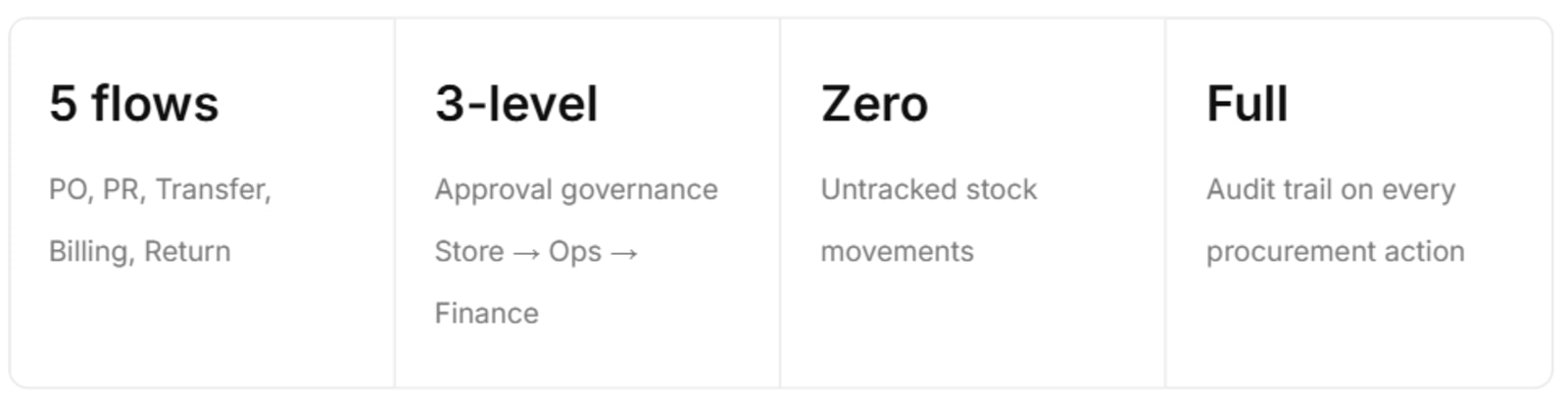
5 flows Enterprise flows from scratchApproval governanceZero Untracked stock movementFull Audit trail per PO
Overview
As Hearzap expanded across multiple stores, inventory operations didn't scale with it. The system that existed was designed to record inventory counts not to manage the flow of goods, govern procurement and give the business visibility into what was moving across the network.
Stock was shipped from the central office to stores with no tracking. Stores needing to transfer stock to each other had no mechanism to do it. Procurement happened informally managers purchasing directly, with no proper approvals, no reconciliation.
System consequence: The larger Hearzap grew, the more unmanageable operations became. Every new store added more coordination overhead and more blind spots that couldn't be resolved from inside the product.
This wasn't a UI problem. The workflows needed to be designed from scratch and connected into a single operational platform.
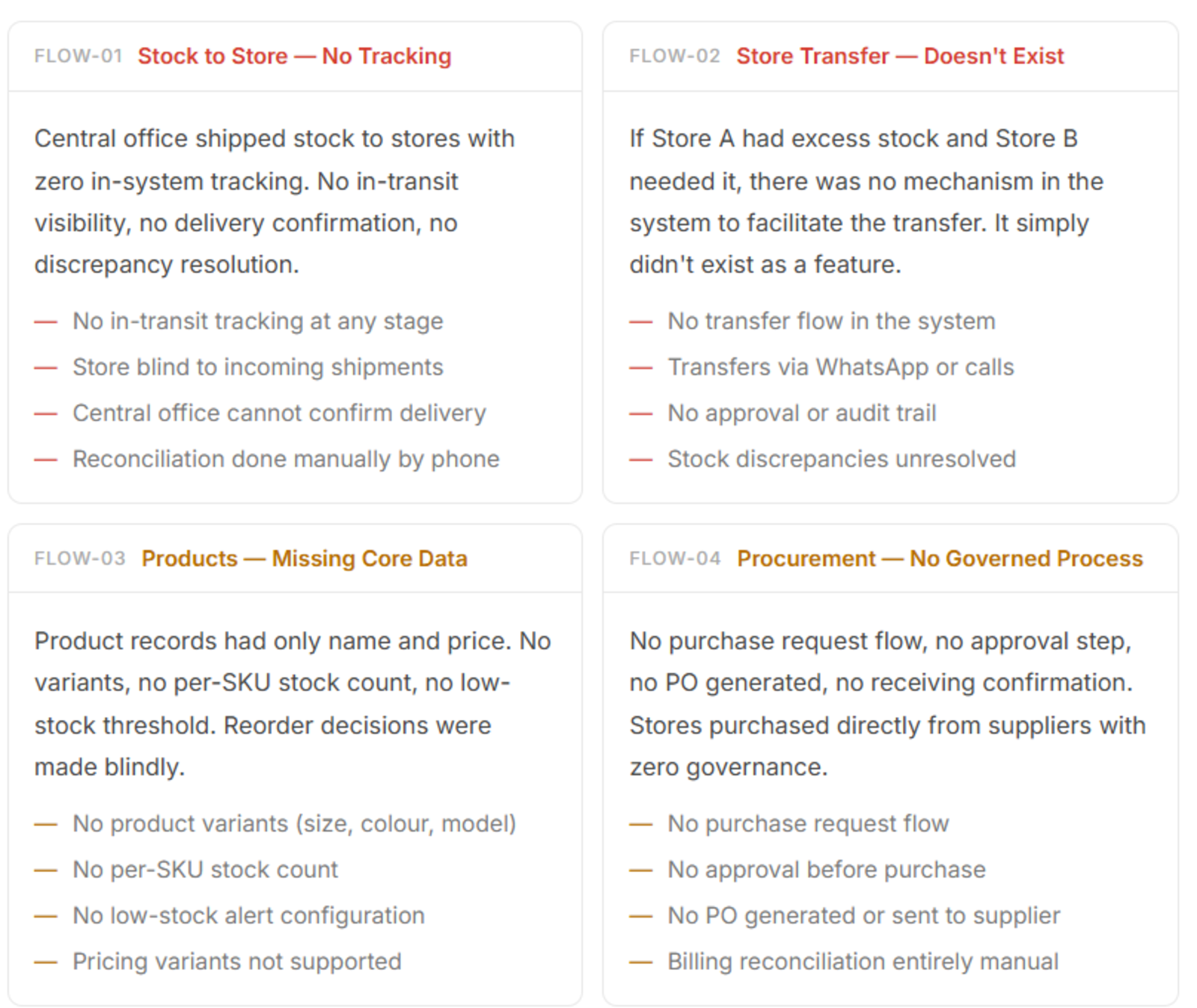
Four broken flows identified across the system
Through interviews with store managers, central office operations, and the finance team, I mapped every place where the system failed the actual work. Four distinct broken flows emerged each one a gap where the business was operating entirely outside the product.
Root Insight: The system was built to record inventory not to manage it. Every operation that actually moved goods existed entirely outside the product.
Business Loss
No visibility into stock movement across stores
No centralized tracking of incoming and outgoing inventory
Procurement decisions were made with incomplete information
Inventory utilization across stores remained low
System Complexity
Multiple disconnected workflows
Manual coordination between stores and central office
Procurement lifecycle was not standardized
Inventory updates depended on human intervention
Time Complexity
Purchase requests required multiple follow-ups
Inventory movement tracking was manual
Stock transfers required central office involvement
Billing and procurement reconciliation took significant effort
The larger the organization became, the more difficult the system became to operate.
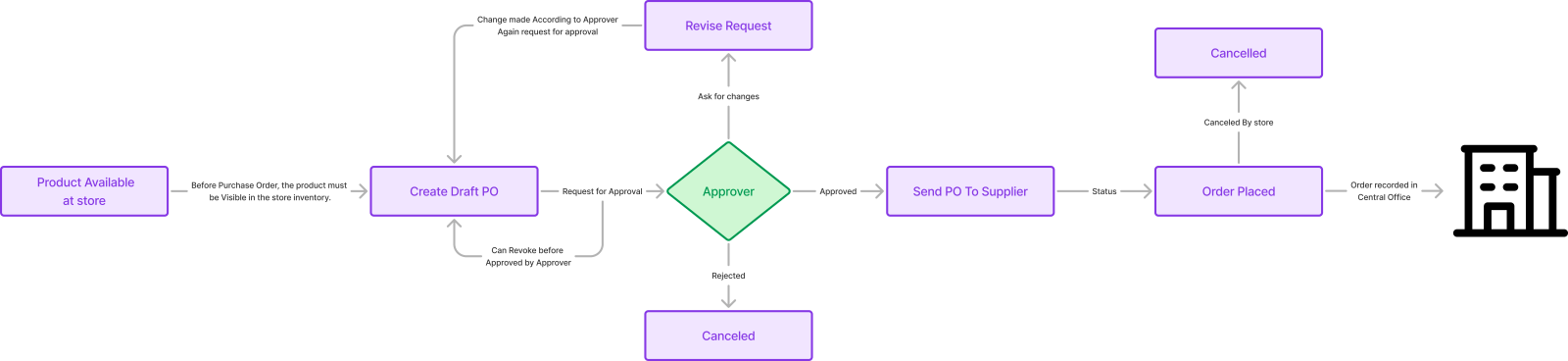
End-to-end PO flow from Purchase Request to closure
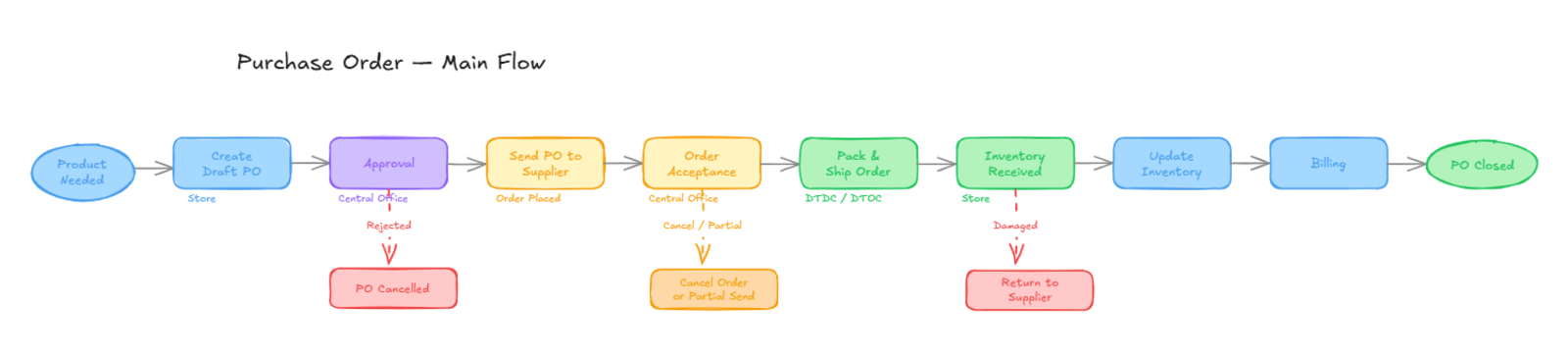
The core of the redesign was building a complete procurement lifecycle from scratch connecting Purchase Request, approval, PO generation, supplier delivery, goods receiving, billing reconciliation, PO closure, and Return Flow into a single governed workflow.
Inventory Life Cycle Flow
The redesigned workflow connects procurement, inventory, finance, and operations into a single lifecycle.
Detailed lifecycle flow from Store to Central Office and from Central Office to Supplier : Please refer to this link
The outer flow shown below represents the Store → Central Office process, where the Central Office acts as the supplier for the Store.
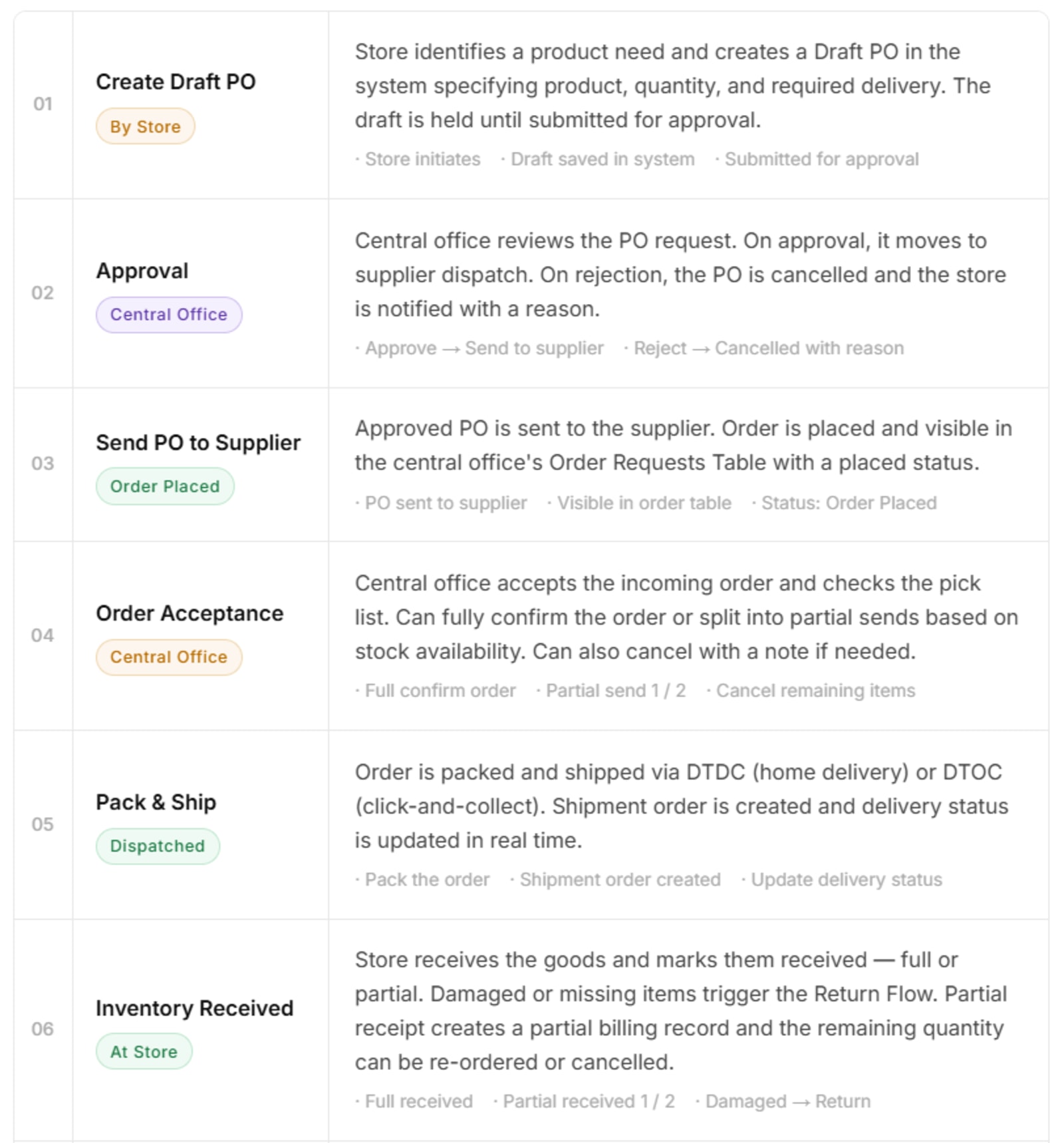
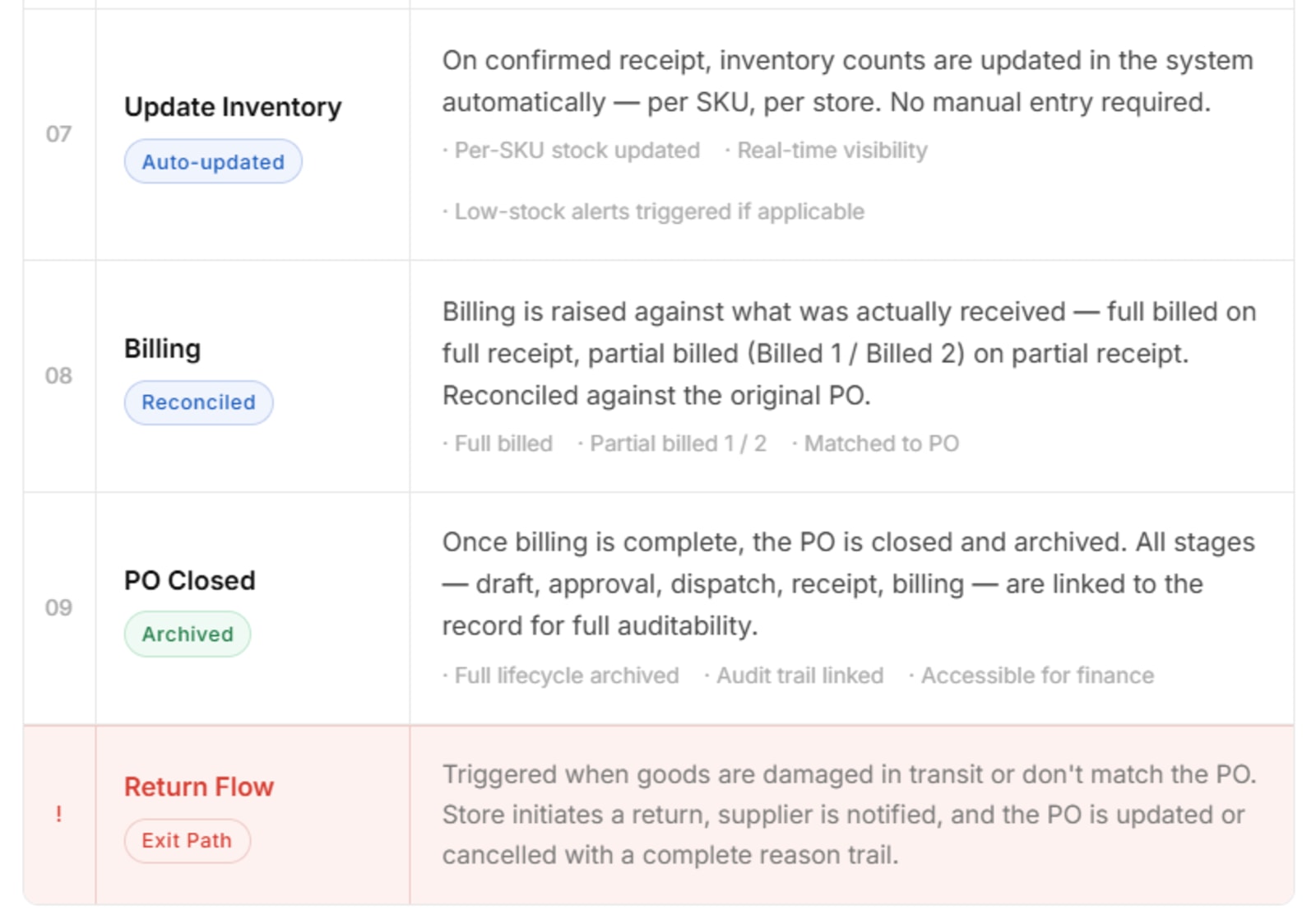
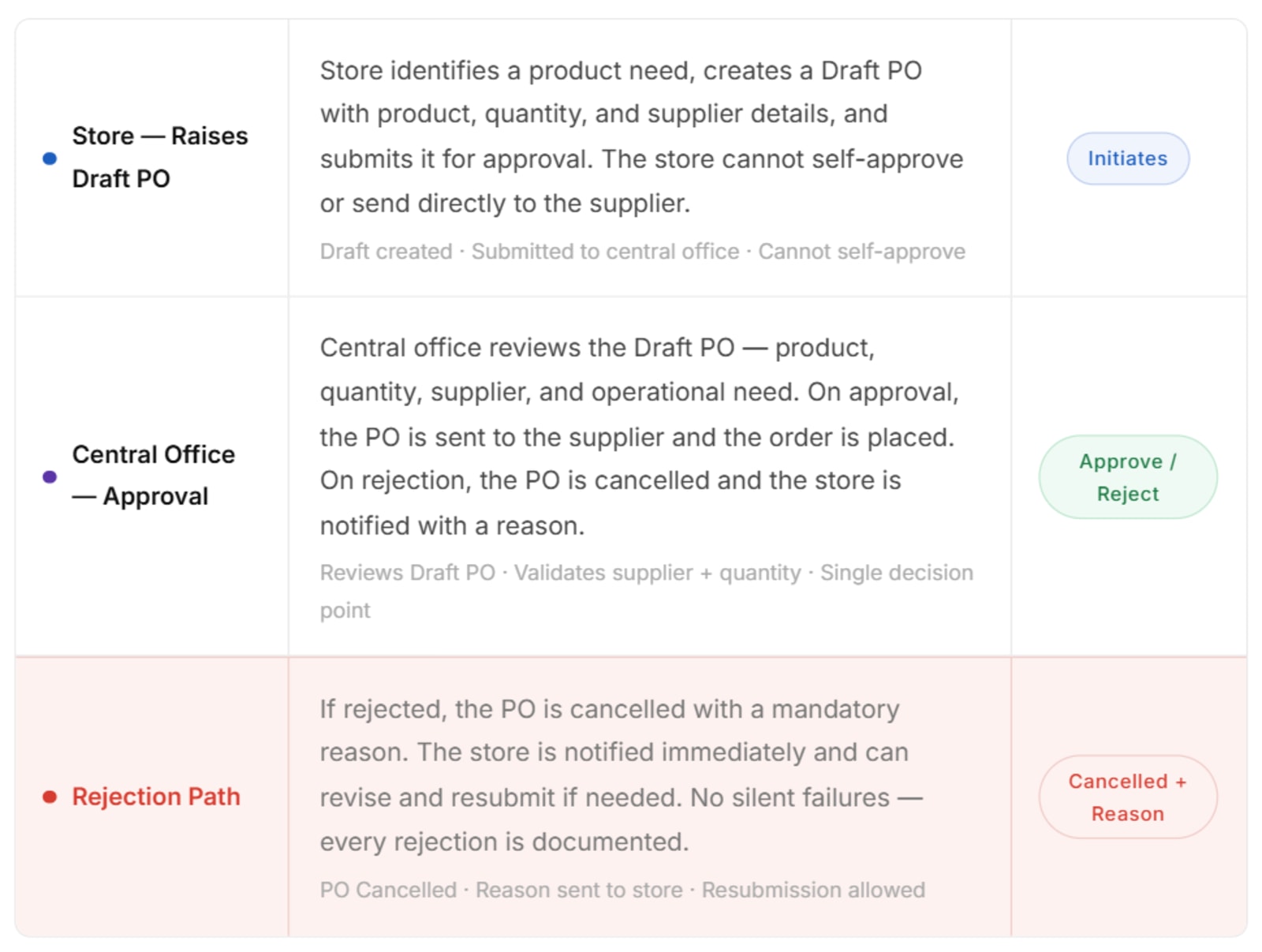
Stage by stage
Why approval is a system-level control, not an optional step
Without a proper approval process, stores can send purchase orders directly, leading to uncontrolled spending, stock issues, and limited visibility. To address this, I introduced an approval step where every PO must be reviewed and approved by the Central Office before it can be sent to the supplier. This ensures better control, accountability, and complete traceability of procurement activities.
Why this matters: Even a single approval gate eliminates unauthorized procurement entirely. Every PO sent to a supplier has been reviewed by central office — giving the business full visibility and control over what is being ordered, from where, and at what cost.
Final Design
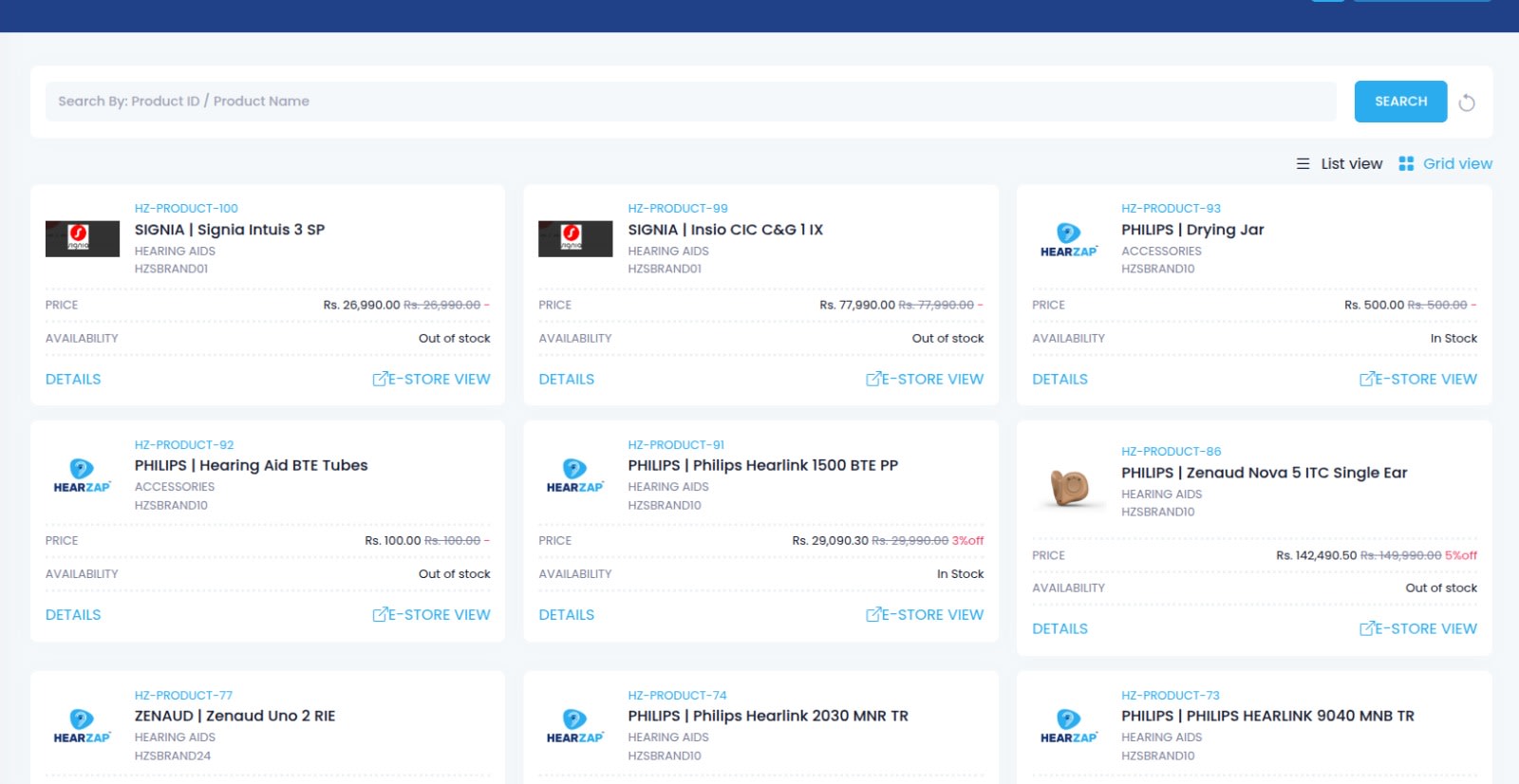
Inventory Stock
Current Inventory Stock Listing Page
Inventory Operations
Inventory operations like PO creation, Approval, Receive, Billing... etc. involve multiple complex workflows and scenarios. Feel free to connect with me if you'd like a detailed walkthrough or more information.
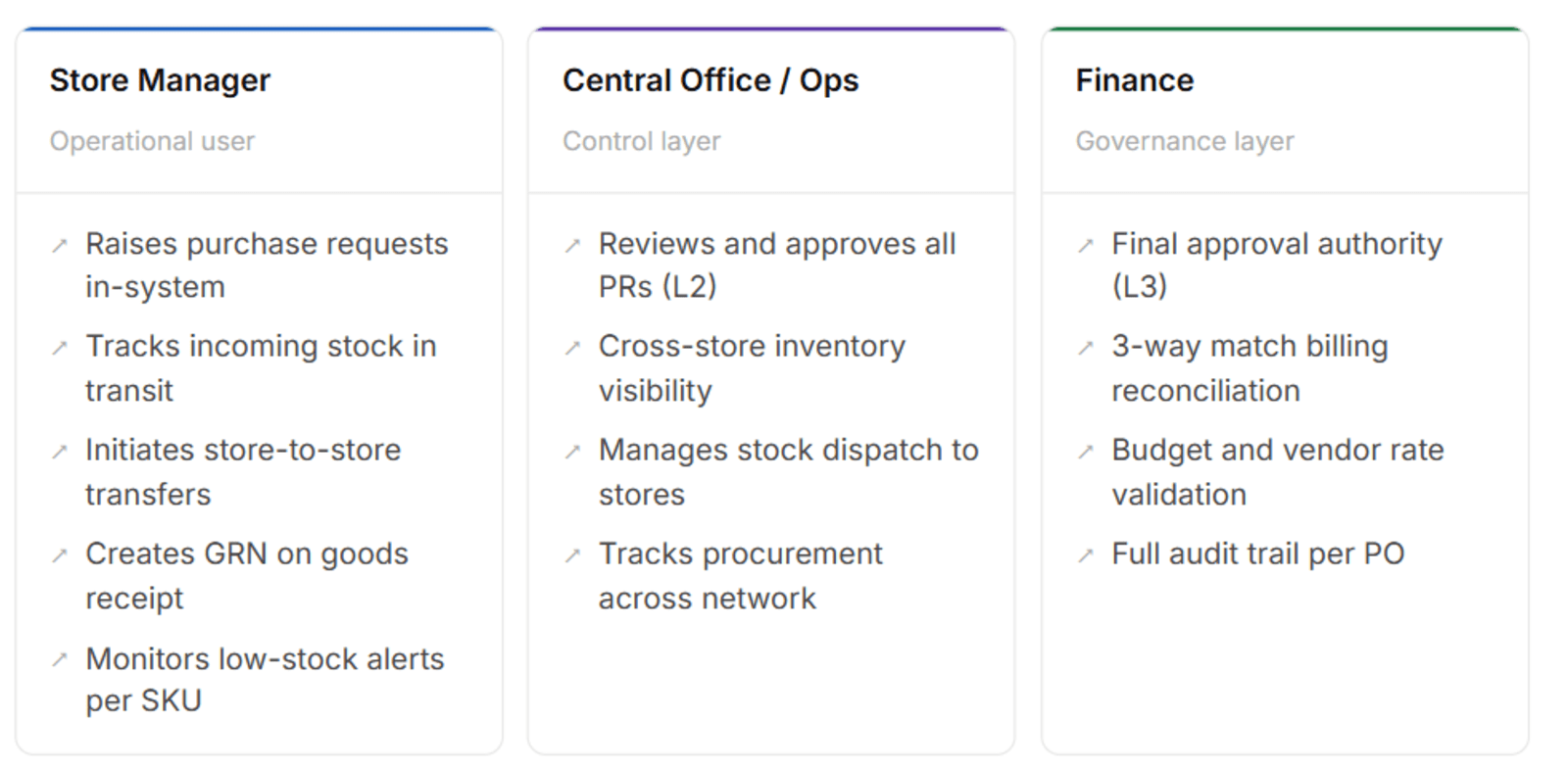
Three roles, one system
Outcome
Before
No procurement lifecycle
Stock shipped with zero tracking
Store transfers via WhatsApp
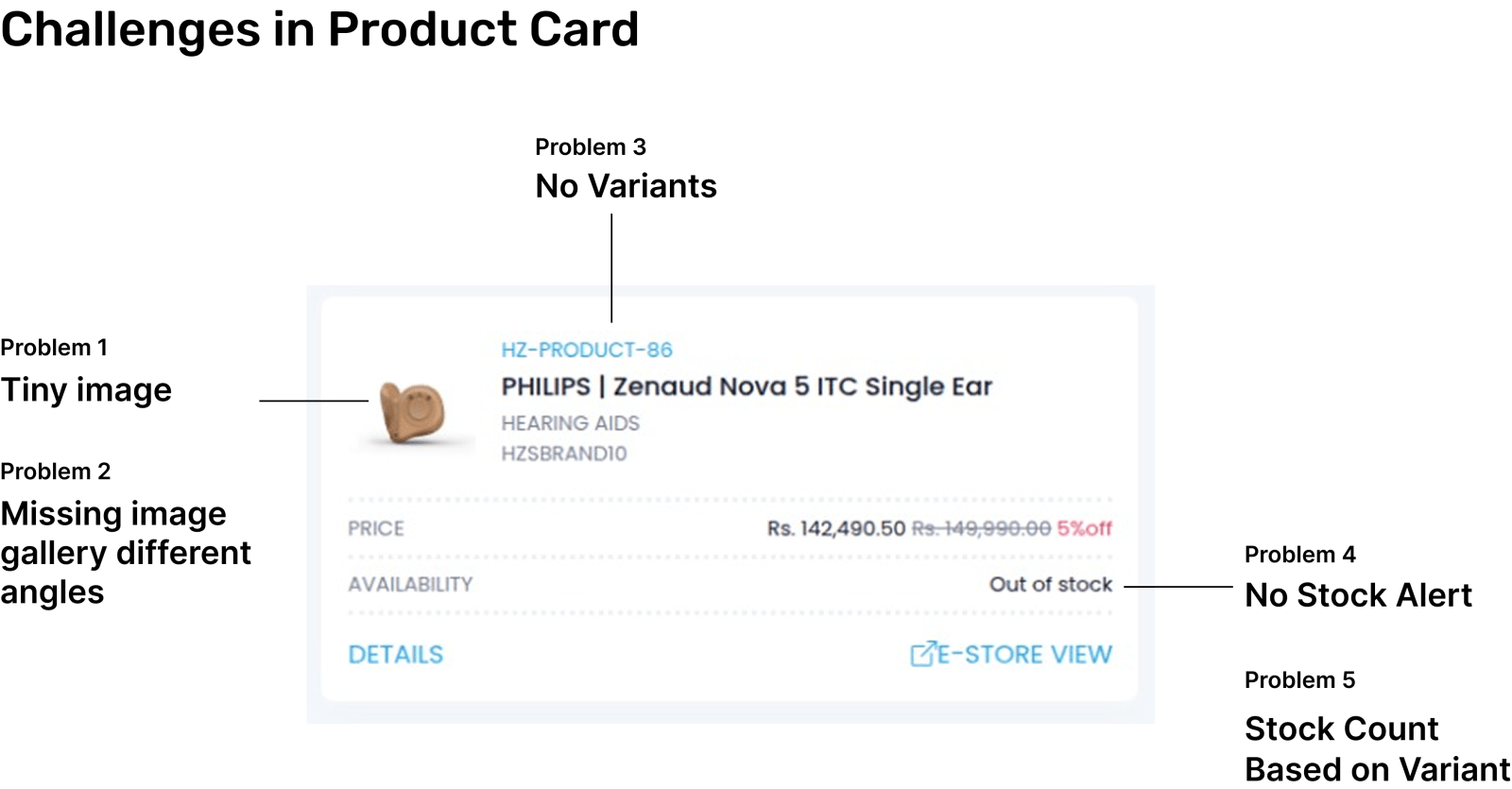
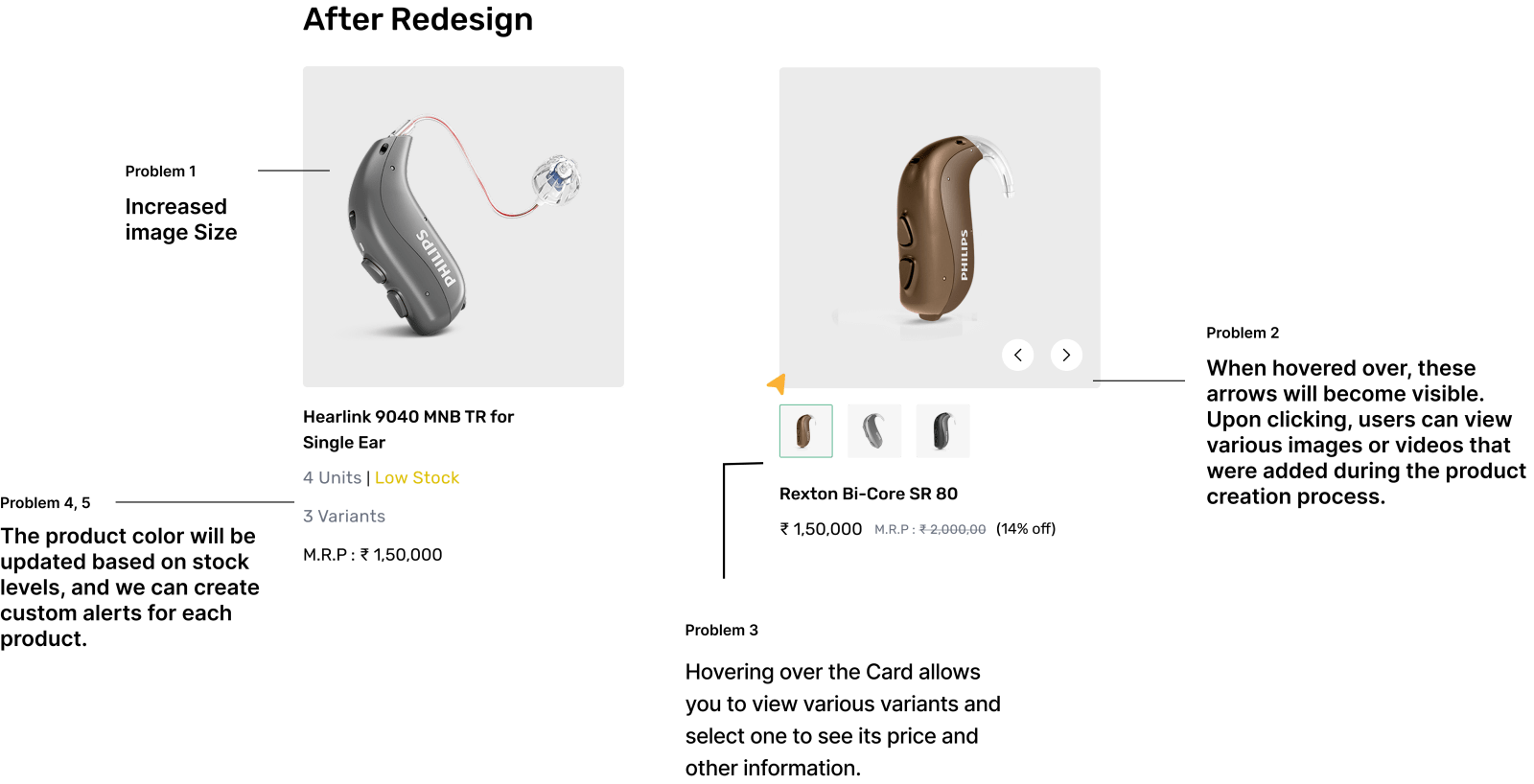
No product variants or stock alerts
No approval or purchase governance
Billing reconciliation fully manual
After
End-to-end PO lifecycle, PR to closure
In-transit tracking, GRN on delivery
Structured store-to-store transfer flow
Variants, stock count, low-stock alerts
3-level approval, governed procurement
3-way match automated reconciliation
Product Catalogue
Impact
Transformed inventory management from a record-keeping system into an enterprise inventory operations platform.
The new system introduced governance, visibility, and operational control across procurement, inventory movement, receiving, billing, and returns creating a scalable foundation capable of supporting Hearzap's growing store network and future expansion.