Reduced patient appointment booking time from 20 min to 5 min
GREs abandoned the booking system entirely, relying on paper records and manual coordination to schedule appointments.
What I Achieved
The situation why does booking take 20 minutes?
Appointments are the heartbeat of Hearzap's business. Every consultation, hearing test, hearing aid trial, fitting, and purchase begins with one. But the system managing them was broken at the root not because of bad intentions, but because scheduling had been buried inside a clinical intake workflow.
To book any appointment, a GRE (Guest Relationship Executive, the front desk staff) first had to complete a full New Visit form 40+ fields covering client source, general information, health history, testing history, services, billing, and audiologist assignment. Only after all of that was the booking screen accessible.
The result: GREs bypassed the system entirely. They wrote customer details on paper, called audiologists to confirm slots, and entered everything into the system retroactively after the appointment was done.
This meant data entered retrospectively, records that couldn't be trusted, and a business flying blind on its own operations.
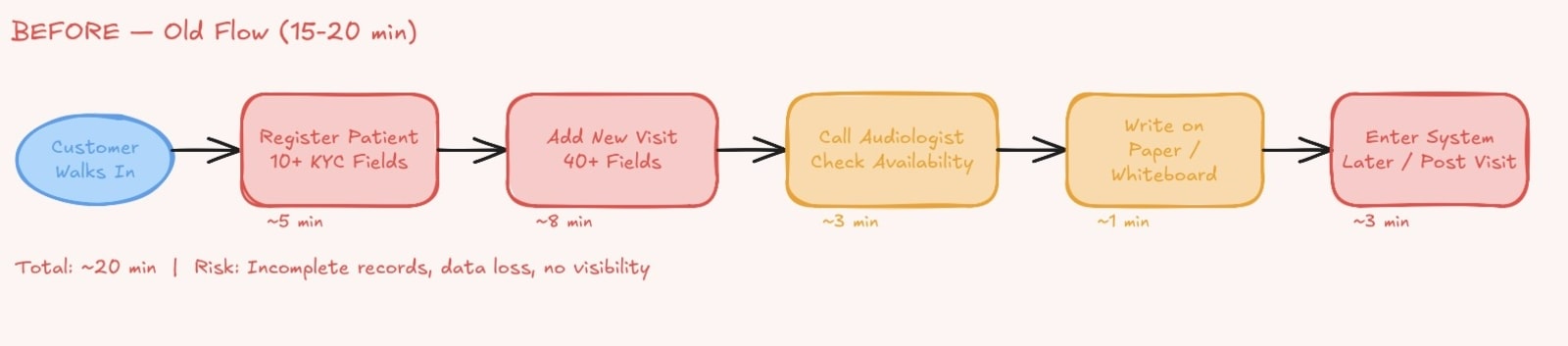
On top of the time cost, the business consequences were severe. Because appointments were confirmed on paper and entered later, the system could never be trusted as a source of truth making store performance tracking, audiologist utilization, and revenue attribution all guesswork.
Research what I found talking to GREs across stores
I interviewed GREs across multiple Hearzap stores to understand the real friction. I didn't go in asking "how can we make the form faster?" I asked them to walk me through what they actually do when a customer walks in. What came back was much bigger than a form problem.
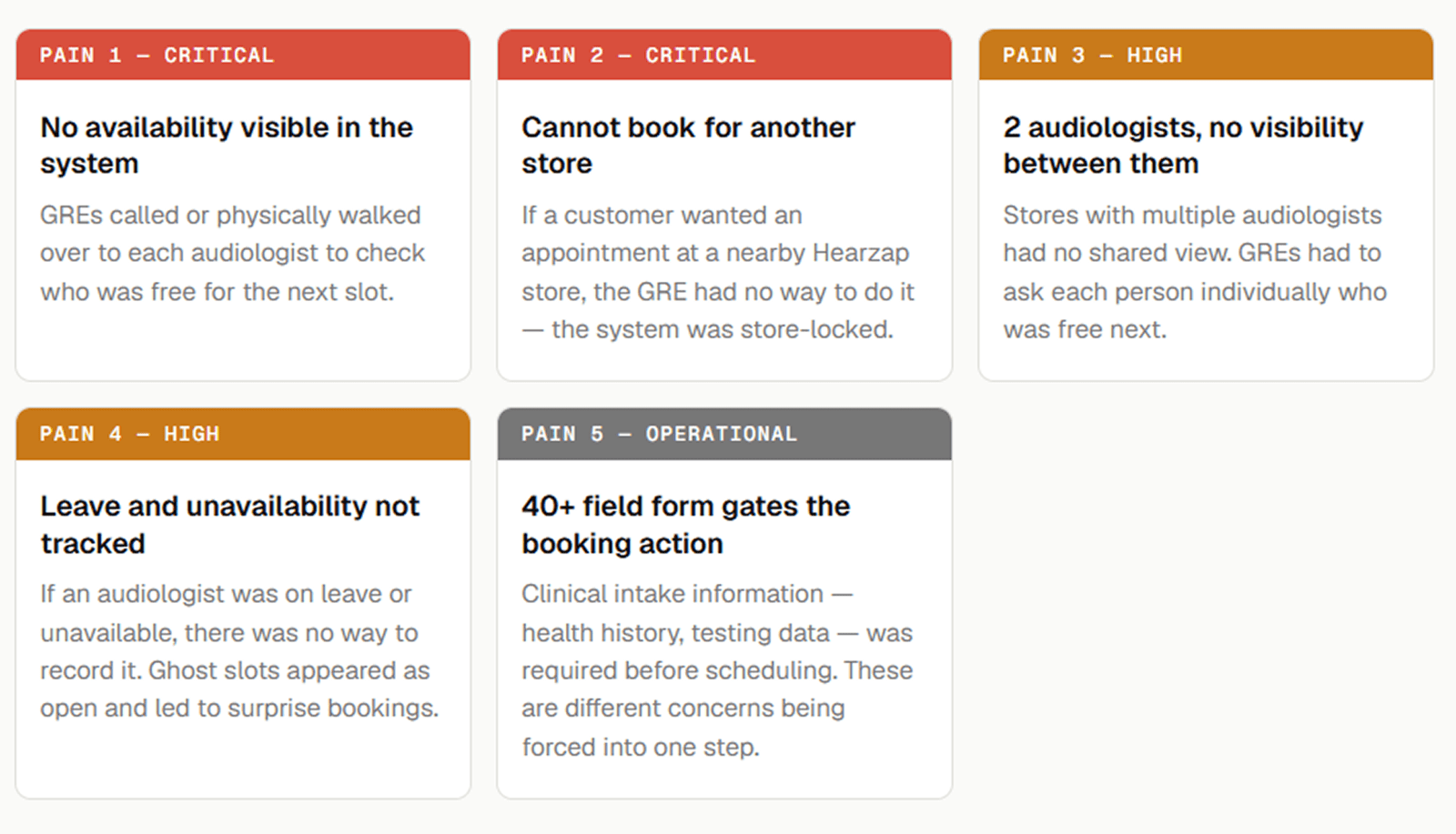
Root insight: This is not a form problem. It is a visibility problem. GREs cannot make scheduling decisions because availability lives entirely outside the system.
The mental model of a GRE is scheduling-first: "find a time, then capture the details." The system forced the opposite fill clinical details first, then find a time. This mismatch was the source of nearly all the friction.
Exploring Solutions
Option 1: Enhanced Card-Based View
The existing system already used a card-based appointment view, so I explored whether redesigning it could solve the problem.
Pros
Familiar for existing users
Minimal learning curve
Faster implementation
Cons
Poor visibility of audiologist availability
Difficult to manage multiple audiologists
Unavailability and leave tracking remain hidden
Doesn't support quick scheduling decisions
Verdict: Improved the UI, but not the workflow
Option 2: Calendar-Based Scheduling
I explored a calendar-first approach where appointments, availability, and unavailability could be viewed together.
Pros
Instant visibility of available slots
Easy management of multiple audiologists
Supports leave and unavailability tracking
Enables faster appointment booking
Supports cross-store scheduling
Cons
Requires users to adapt to a new workflow
Needs regular availability management
Verdict: Solved the root problem visibility. This became the final solution.
Evaluation of Design Decisions: A Comparative Analysis of Two Options
The learning curve of Option B was a real trade-off I took seriously. But a familiar interface that doesn't fix the root problem isn't a solution it's a delay. The calendar pattern is a universal mental model (everyone uses Google Calendar or a scheduling app). The learning curve is bounded and one-time. The visibility gain is permanent.
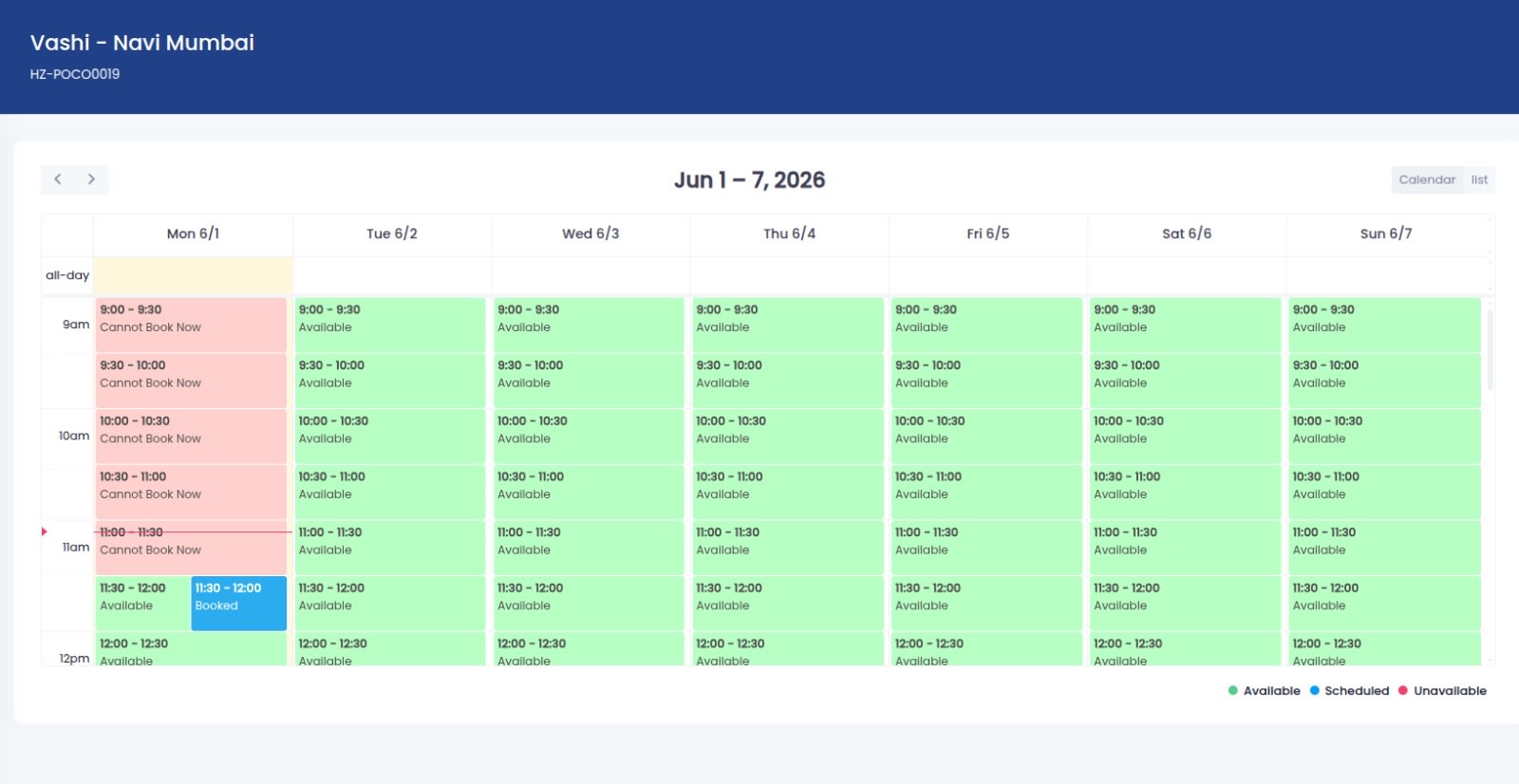
Existing Calendar Design
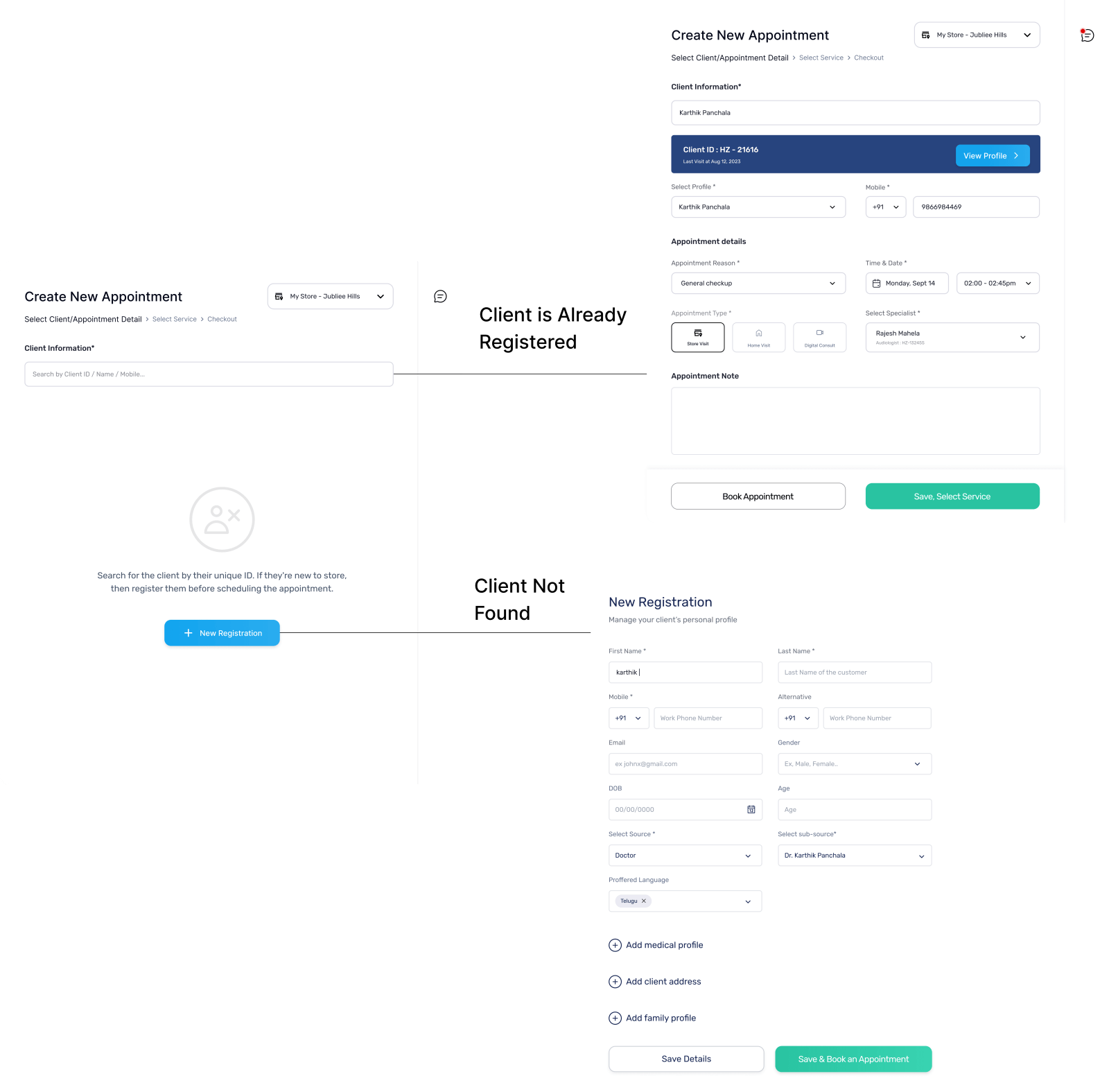
New booking flow scheduling-first, not form-first
A Centralized Appointment Management Calendar
Instead of treating appointments as records inside forms, I redesigned the experience around a scheduling-first approach.
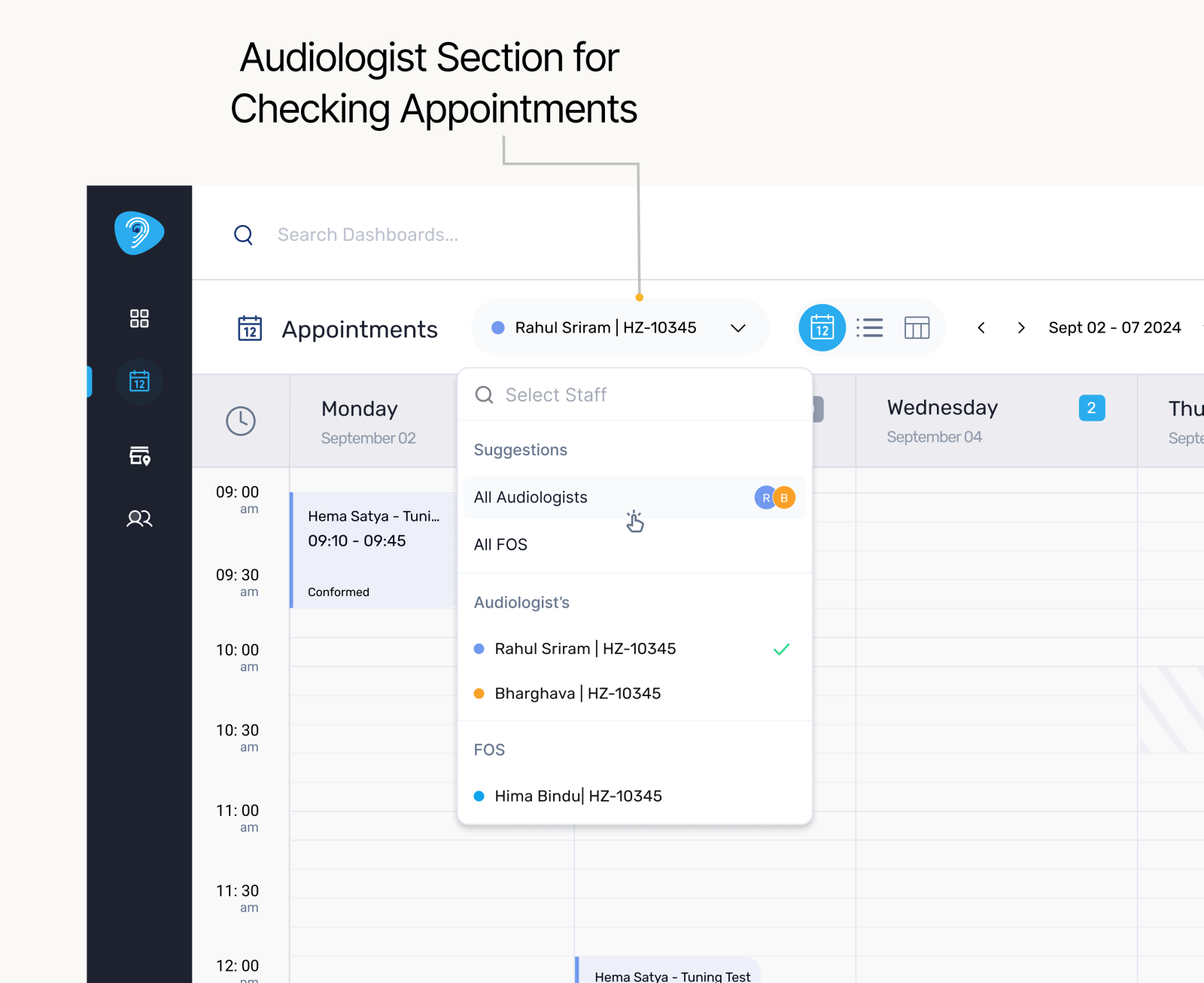
The calendar became the operational hub where GREs and Audiologists could view and manage appointments in real time.
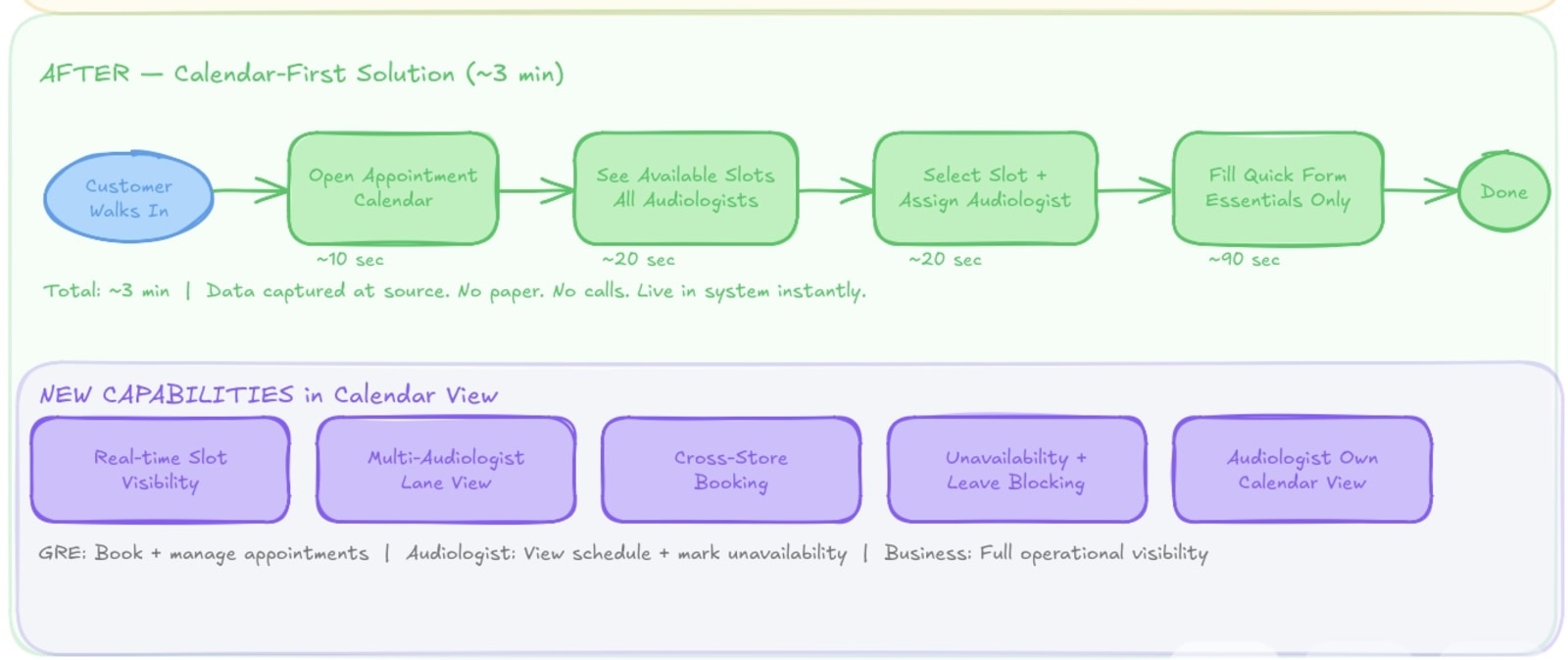
The form that previously had 40+ fields is replaced by a lightweight booking panel only what's essential to confirm the slot: name, phone number, and service type. The detailed clinical intake (health history, testing data) still exists but is decoupled from the scheduling action, and can be completed before or after the appointment.
Final design the calendar as operational hub
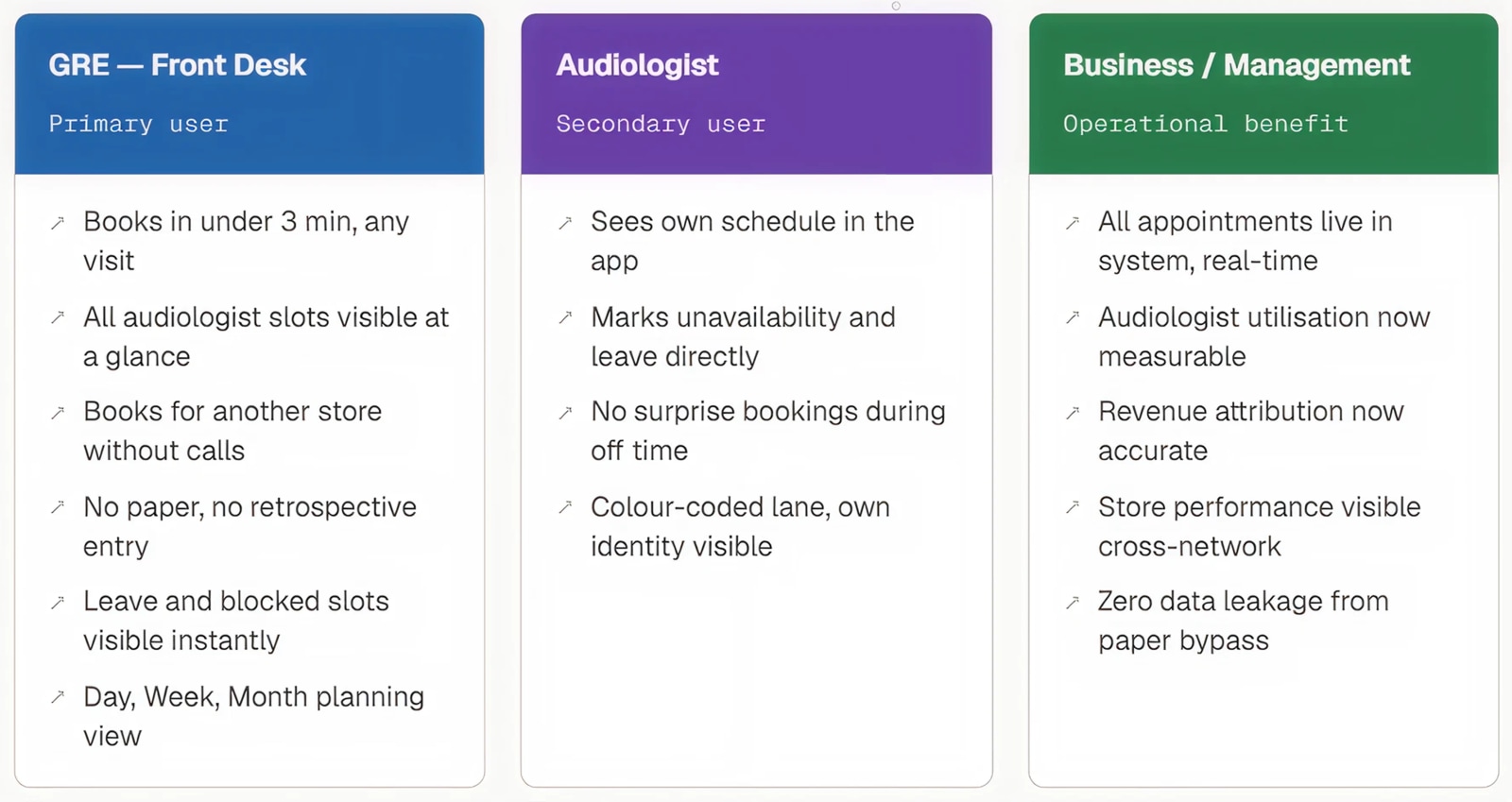
The calendar became the single operational hub for the entire appointment system not just a view, but the place where GREs book, audiologists manage their time, and the business gets visibility across its network.
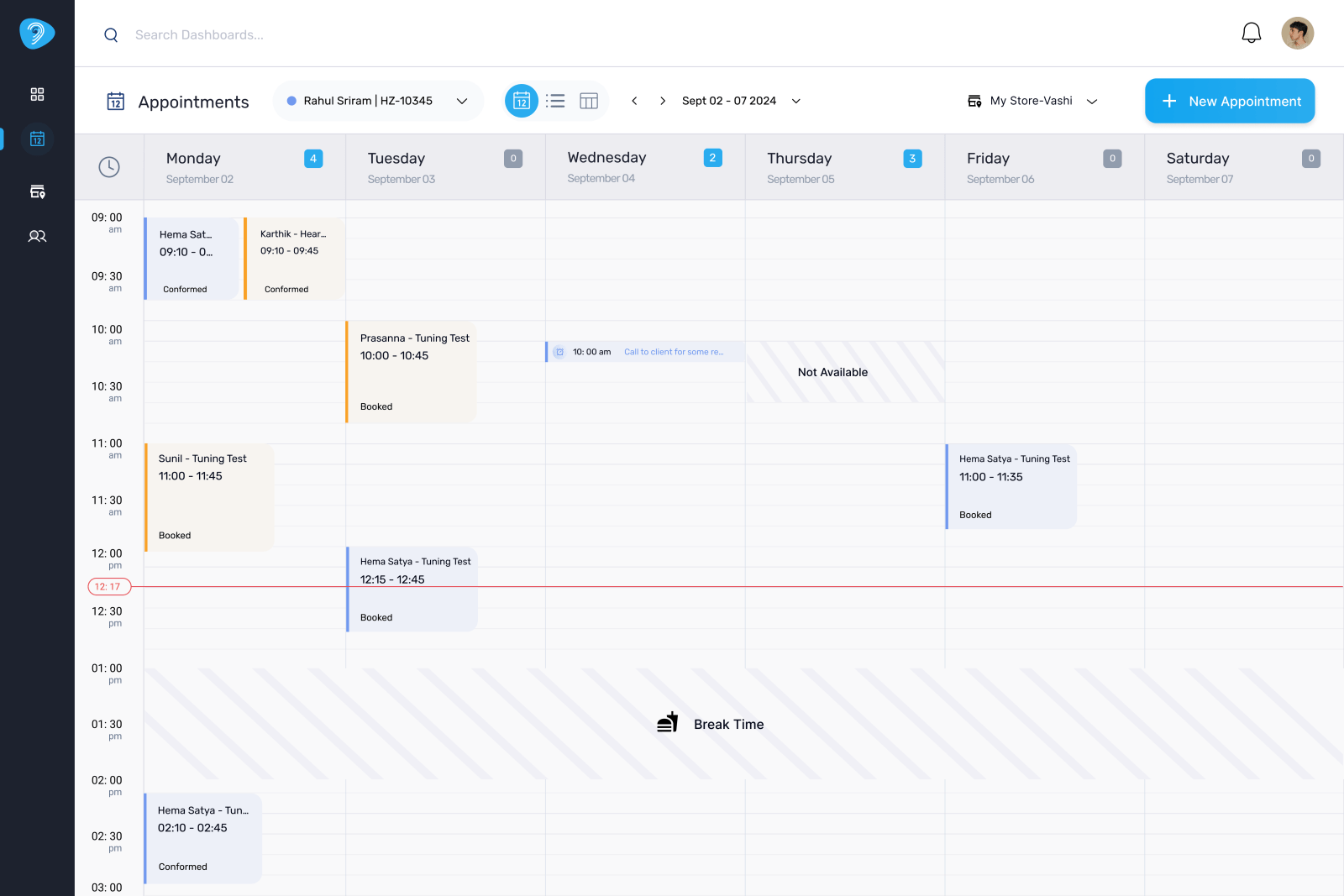
Each audiologist gets a color-coded lane. GREs can see all open slots, all confirmed appointments, and all blocked time at a glance no calls, no coordination overhead.
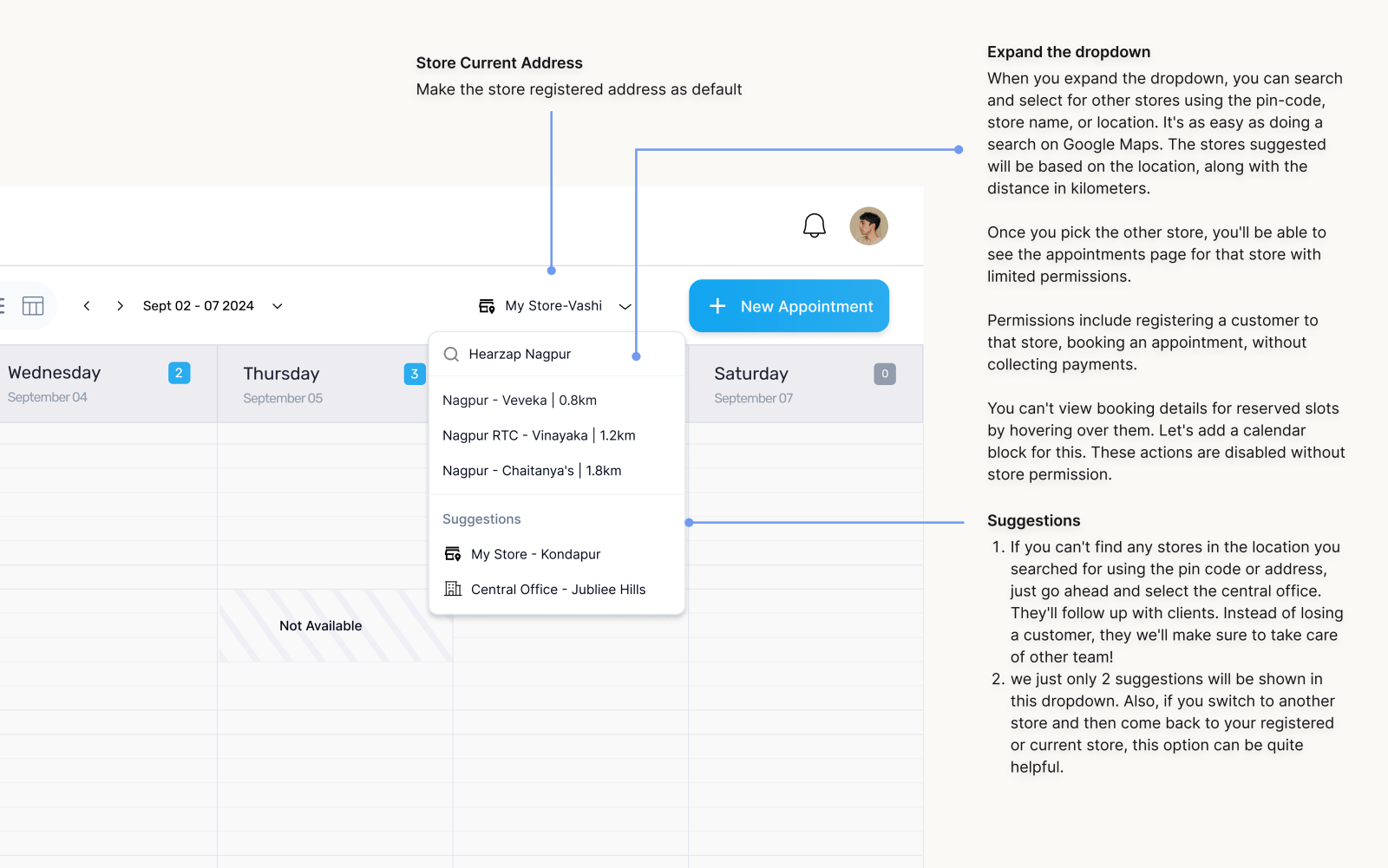
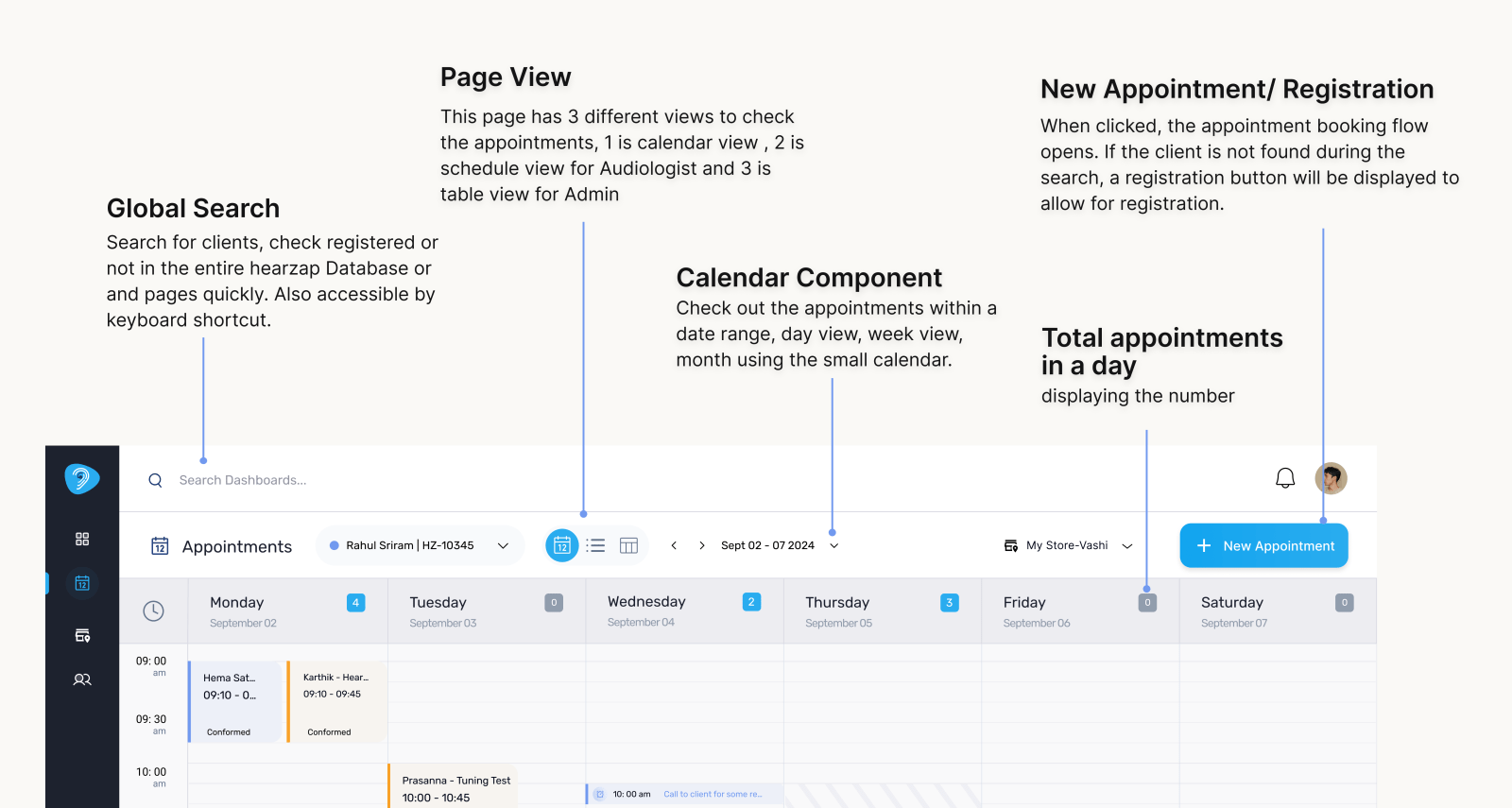

Booking/Registration
What the solution unlocked three roles, one system
Trade-offs
What We Gained
Faster appointment booking
Better operational visibility
Reliable appointment tracking
Improved scheduling accuracy
Stronger business reporting
What We Accepted
Users needed to adapt to a calendar-based workflow
Initial setup was required for register audiologist with color code
Calendar views required more screen space than traditional forms
The trade-off was worthwhile because the gains in visibility, efficiency, and operational control significantly outweighed the learning curve
Outcome

The redesign transformed appointment management from a fragmented, paper-dependent process into a centralized scheduling system. By addressing the root visibility problem not just the form length the solution improved booking speed, operational reliability, and business reporting simultaneously.
The most important measure of success wasn't the time reduction itself. It was that the system became trustworthy records are complete, data is captured at source, and the business can now make decisions based on what's actually happening in its stores.
Our Happy Customers Response

Karthik approached the problem beyond a design perspective and focused on the operational challenges faced by our store teams. By reimagining the appointment management experience, he helped simplify a process that previously took up to 20 minutes into a much faster workflow. The solution not only improved productivity for our GREs and Audiologists but also gave us better visibility into appointments, resource utilization, and store performance across the network. His ability to connect user problems with business outcomes made this a highly impactful initiative for Hearzap
RajaCEO & Founder, Hearzap